Wanda Bodnar
About
I am a Chartered Marine Scientist with diverse experience across academia, industry (offshore), and the charity sector. For over eight years, I have worked on aquatic habitat conservation, restoration, and climate resilience projects in the Thames Estuary. I also lead ecology-focused stand-up paddleboarding (SUP) sessions, blending natural history education with outdoor activities.
Currently, I am a research student at the London NERC Doctoral Training Partnership programme.
- Marine and Estuarine Science
- The Thames Estuary
- Climate Science
- Data Science
- Geographic Information System
- Stand Up Paddleboarding
-
Research student, 2024 - present
Queen Mary University of London (QMUL), Institute of Zoology (IoZ) and University College London (UCL) as part of the London NERC Doctoral Training Partnership, United Kingdom
-
MSc in Marine and Lacustrince Science and Management, 2011 - 2013
Vrije Universiteit Brussel (VUB), Universiteit Antwerpen (UA), Universiteit Gent (UGent), Belgium
-
BSc in Biology and Physical Education with teaching qualification, 2002 - 2006
Eötvös Loránd University (ELTE), Hungary
Research
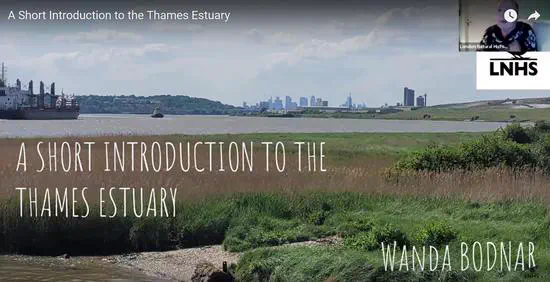
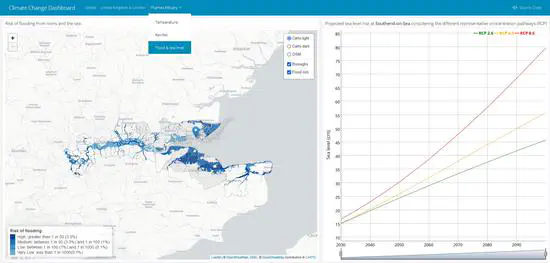
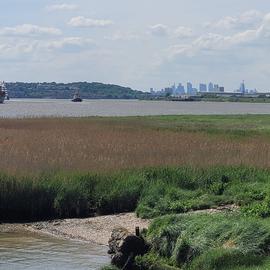
Estuarine ecosystems are among the most productive environments, supporting diverse fish communities through complex food webs and connections between habitats. However, pressures such as urbanisation, habitat degradation, and climate change threaten their health. In the Thames Estuary, historic habitat loss has reduced fish populations and weakened ecosystem resilience. Although habitat creation and restoration projects are underway, we still lack a clear understanding of how these new or restored intertidal habitats function.
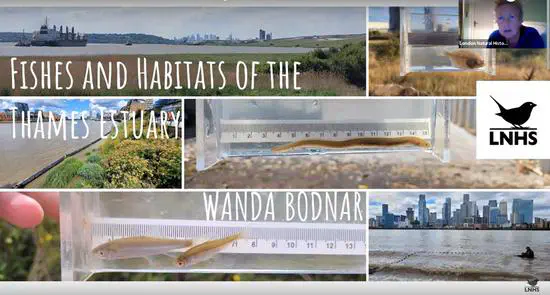
This research investigates how fish use restored and engineered intertidal habitats, focusing on their feeding relationships and the role of habitat connectivity. By combining traditional fish sampling with modern methods like environmental DNA (eDNA), gut content analysis, stable isotope studies, and functional guild assessments, I will evaluate fish diversity, diet, and habitat quality. Environmental factors such as salinity, temperature, turbidity, and dissolved oxygen are also measured to understand how they influence fish movement, feeding, and ecosystem processes.
The results will help guide evidence-based restoration and management, aiming to improve connectivity, support fish populations, and strengthen the resilience of the Thames Estuary.